

The best time to take fish oil is with a meal that has some fat in it, whether that meal happens at 6 a.m. or midnight. Timing by the clock does not change how well your body uses omega-3 fatty acids. What changes the results is whether you take it with food and whether you keep doing it every single day.
That matters a lot if your schedule does not look like a typical 9-to-5. Warehouse shifts, overnight nursing rotations, and long-haul routes do not leave room for a "textbook" morning routine. We built XGRITX around that reality, and Deep Current Omega-3 Fish Oil is formulated for people whose "morning" might start at 4 a.m. or 9 p.m.
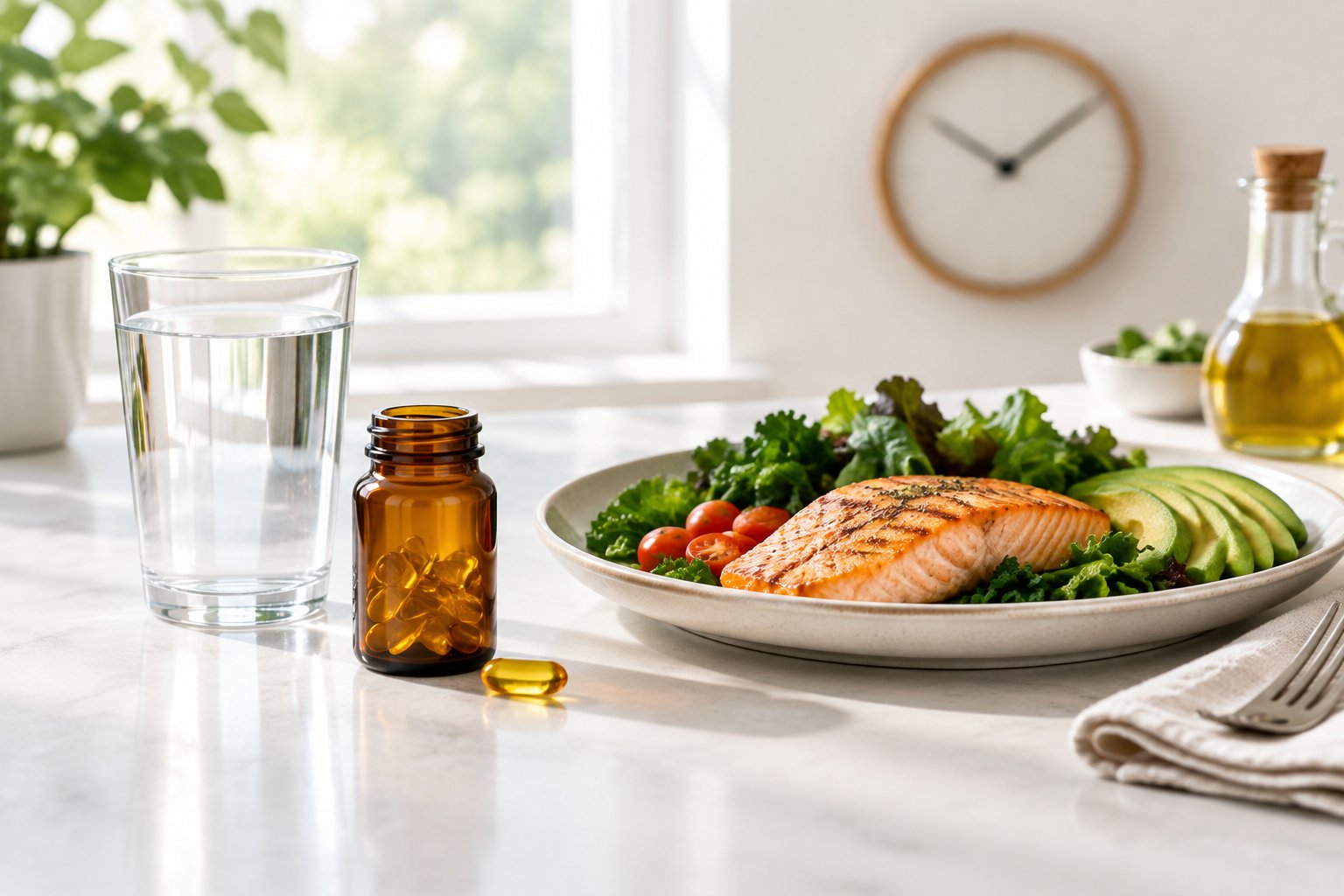
This article covers when to take fish oil, why food matters more than the hour on the clock, and how to make it work no matter what shift you're on.
Morning or Night? Choose the Meal You Will Repeat
The clock does not matter nearly as much as the plate in front of you. Fish oil timing comes down to picking one meal you eat almost every day and building the habit around it, whether that meal lands at sunrise or sundown.

Is Fish Oil in the Morning Better Than Fish Oil at Night?
Neither time wins outright. Research says fish oil in the morning and fish oil at night produce the same omega-3 supplements results over time, according to MedicineNet.
One small twist worth knowing: a 2021 pilot study found morning intake led to lower triglyceride levels and reduced saturated fatty acids compared to evening intake, though both timings raised EPA and DHA levels equally, according to Verywell Health.
Why Consistency Matters More Than the Clock
Skipping doses does more damage than picking the "wrong" time of day. Omega-3 fatty acids build up in your body gradually, so your omega-3 levels only reach a useful range after weeks of steady use, not a single dose.
Fish oil capsules taken sporadically will not deliver the brain health or cognitive function support that regular use can. Pick a meal you never miss and anchor your dose there.
When a Larger Evening Meal May Be the Better Choice
If breakfast is coffee and nothing else, wait. A bigger dinner with real fat content will absorb your fish oil far better than a rushed, low-fat breakfast, and it may also help with sleep quality since DHA plays a role in regulating melatonin and recovery, according to Verywell Health.
Why a Fat-Containing Meal Matters
Fish oil is fat-soluble, so it needs dietary fat around it to absorb well. Take it on an empty stomach and you get less benefit, plus a higher chance of that unpleasant fishy aftertaste.
Should You Take Fish Oil With Food or on an Empty Stomach?
Food wins, every time. A 2019 review found that taking an omega-3 concentrate with a fat-containing meal increased bioavailability, while an older 2015 review found that a low-fat meal reduced absorption, according to Medical News Today. Fish oil taken on an empty stomach tends to float on top of stomach contents instead of mixing in, which can also trigger reflux.
Healthy Fats That Can Support Absorption
Pair your dose with something that has real fat in it. Eggs, avocado, nuts, seeds, or a splash of olive oil all work, and the American Heart Association lists tuna, salmon, almonds, peanuts, pumpkin seeds, chia seeds, and avocado oil as solid options, according to Prevention.
If breakfast is thin on fat, hold off until a heavier meal.
What Fish Oil Form Can Tell You About Tolerance
Check the label for triglyceride or re-esterified triglyceride form instead of ethyl ester. These forms sit closer to how omega-3s naturally exist in fish, which makes them easier to digest and absorb, according to Prevention.
Build a Routine That Works on Any Shift
Shift work throws normal meal timing out the window, but the same rule still applies: attach fish oil to a meal you eat every workday. The details just need to flex around your clock-in time.
A Simple Routine for Early Starts and Day Shifts
If you're up before dawn for a warehouse or construction shift, take your dose with the first real meal of the day. A protein-and-egg breakfast, or a lunch break if mornings move too fast, both work fine as long as you repeat the same pattern daily.
How to Take Fish Oil on Night Shift
Nursing and overnight logistics crews can anchor fish oil to their "dinner," even if that meal happens at 11 p.m. before clocking in. Consistency, not the hour, drives the omega-3 levels your body needs to support joint health and brain function over time. Our rotating shift sleep schedule guide covers more on aligning supplements and meals with irregular hours.
What to Do When Meals Move Around
Rotating schedules mean your "usual" meal shifts week to week. Keep the fish oil with whichever meal is largest and most fat-containing that day, and use a phone reminder if your shift pattern changes often. Pairing it with Daily Armor multivitamin gummies at the same meal can simplify the routine further.
Reduce Fishy Burps, Reflux, and Stomach Upset
Taking fish oil with food is the single biggest fix for fishy burps and stomach upset. Up to 20% of fish oil users report burps and other gastrointestinal side effects, and food is the first line of defense, according to a guide on stomach-friendly fish oil dosing.
Why Fish Oil Can Cause Heartburn and Fishy Aftertaste
Fish oil can relax the lower esophageal sphincter, letting stomach acid creep upward and causing heartburn along with the fishy aftertaste, according to Ubie Health. Taking it on an empty stomach or lying down right after a dose makes both worse.
When Splitting a Daily Dose May Help
Splitting one larger dose into two smaller ones, each with a separate meal, can ease digestion and lower the risk of reflux, according to the Arthritis Foundation as cited by Medical News Today. Staying upright for 30 minutes after your dose also helps keep everything down where it belongs.
Medication and Health Situations That Need Professional Guidance
Fish oil can raise bleeding risk, so talk to a doctor before combining it with warfarin or other blood thinners. It can also affect blood pressure medications, interact with certain contraceptives, and lower your vitamin E levels, according to Good Housekeeping. People managing diabetes or cardiovascular risks should also check with a healthcare provider before starting a new dose, since taking more than the beneficial amount has been linked to higher stroke risk.
Food Sources, Benefits, and Product Quality to Consider
Fatty fish and fish oil supplements both deliver EPA and DHA, the two omega-3s tied to heart, brain, and joint benefits. Knowing the difference between omega-3 types and what to check on a label helps you get real value from either source.
EPA, DHA, and ALA: What Is the Difference?
EPA (eicosapentaenoic acid) and DHA (docosahexaenoic acid) come from fatty fish and shellfish, while ALA (alpha-linolenic acid) comes from nuts, seeds, and vegetable oils, according to MedicineNet. EPA and DHA are the forms most closely tied to heart health, cognitive function, and reduced inflammation.
Can Seafood Cover Your Omega-3 Needs?
Two servings of fatty fish a week, like salmon, mackerel, sardines, or trout, can meaningfully lower cardiovascular disease risk, according to a nutritionist cited by Good Housekeeping. Shellfish like mussels and oysters also count. Pregnant or breastfeeding readers should choose lower-mercury options like salmon, trout, herring, and sardines, and stick to 8 to 12 ounces per week, according to MedicineNet.
What to Check on a Fish Oil Label
Look for the combined EPA and DHA amount per serving, not just total fish oil weight. A typical supplement holds around 1,000 mg of fish oil with roughly 300 mg of combined EPA and DHA, and daily intake of 250 mg is often considered sufficient, according to Verywell Health. Our guide to how much fish oil to take breaks down dosing by body weight and goal.
Pair Fish Oil With the Meal You Never Miss
Deep Current Omega-3 Fish Oil delivers 720 mg of omega-3 per lemon-flavored softgel, including both EPA and DHA, built for people whose schedule does not follow a normal clock. The lemon flavor is meant to cut down on the fishy aftertaste that keeps a lot of people from sticking with fish oil supplements long term.
Attach it to whichever meal you eat without fail, whether that's a 5 a.m. breakfast before a warehouse shift or a midnight plate before clocking into a hospital floor. Regular omega-3 intake is linked to lower triglyceride levels and support for heart disease and heart attack risk reduction, benefits that only show up with consistent use over weeks and months.
You can view the full label details on the Deep Current Omega-3 Fish Oil product page.
Frequently Asked Questions
Is it better to take fish oil at night or in the morning?
Neither time is better on its own. What matters is pairing your dose with a fat-containing meal and repeating that same pattern daily, whether that meal happens in the morning or at night.
Can I take fish oil on an empty stomach?
Taking fish oil on an empty stomach usually leads to weaker absorption and a higher chance of fishy burps or heartburn. Taking it with a meal that has some fat helps it absorb properly and sit better in your stomach.
How many times a day should I take fish oil?
Most people take fish oil once daily with a meal, but splitting a larger dose into two smaller doses with separate meals can reduce reflux and burping. Check your product label for the recommended serving size and follow it.
Can I take fish oil with a multivitamin or magnesium?
Yes, fish oil capsules can generally be taken alongside a multivitamin or magnesium supplement at the same meal. Taking them together at one sitting can also make it easier to stay consistent every day.
Can fish oil keep you awake at night?
Fish oil is not known to cause sleeplessness, and some research links higher omega-3 levels to better sleep quality. If you notice heartburn or reflux after a nighttime dose, that discomfort, not the omega-3s themselves, is more likely to disrupt sleep.
What are the signs that fish oil is working?
Benefits build gradually, often over weeks, as your omega-3 levels rise toward a healthier range. Signs can include steadier joint comfort, better focus, and improved triglyceride numbers on routine bloodwork, though a lab test is the clearest way to confirm your omega-3 status.


