

Working a night shift messes with your body in ways a day job never will. Your gut slows down, your blood sugar reacts differently, and hunger hits at the worst possible hours. A solid night shift eating schedule means eating a balanced anchor meal before your shift, a lighter protein-focused snack mid-shift, and a small easy-to-digest meal after clocking out, timed around your sleep window instead of the clock on the wall.
At XGRITX, we build products around the reality of 10- and 12-hour shifts, so we spend a lot of time thinking about what keeps warehouse crews, nurses, drivers, and tradespeople running through the night. Getting your night shift eating schedule right protects your energy levels on the floor and helps you actually fall asleep once you get home. Craig Roberts built this brand around that exact problem after 20-plus years working warehouse shifts himself.
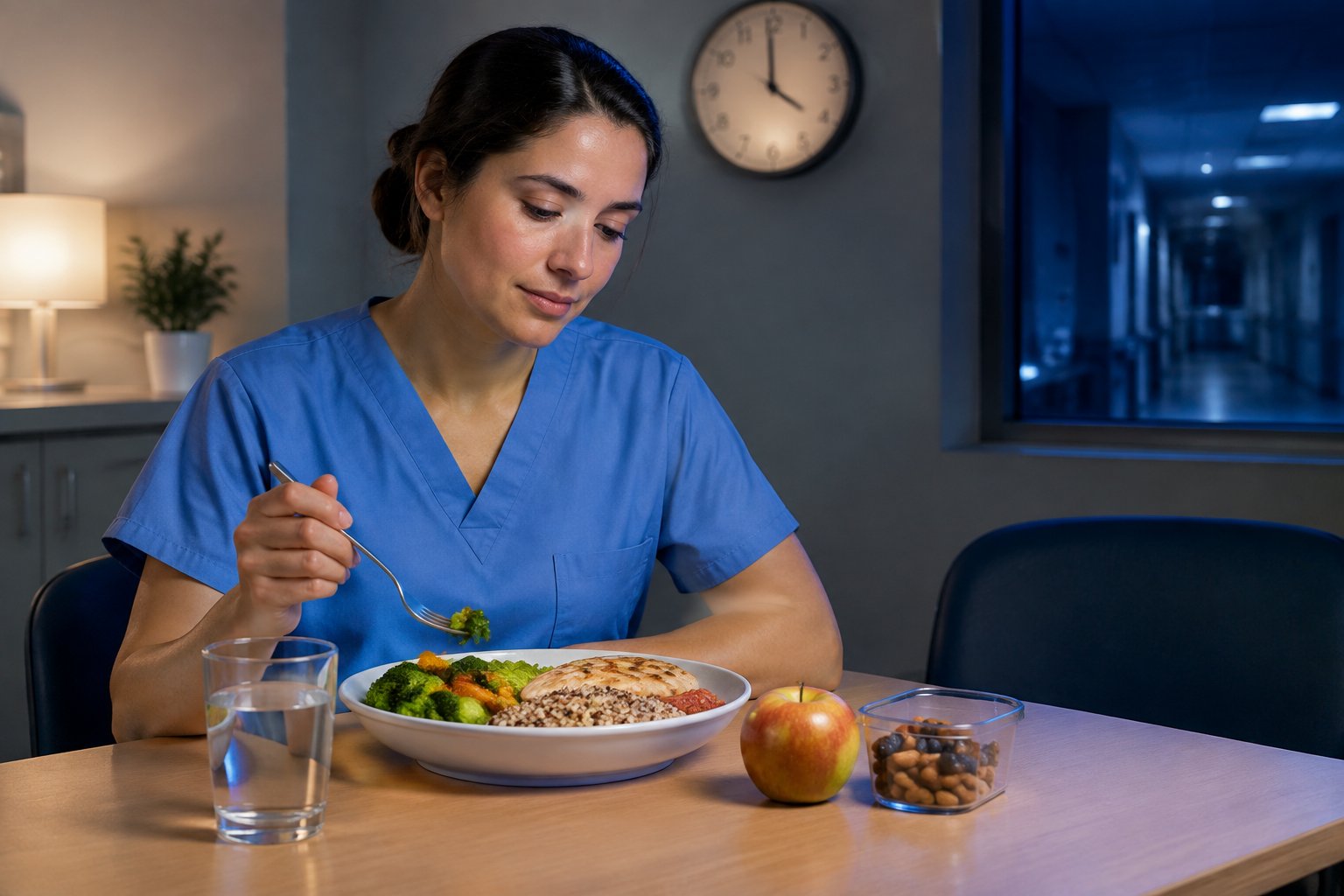
If you're tired of crashing at 3 a.m. or lying awake after a shift with a stomach full of vending-machine food, the timing framework below will fix most of that. And if you want backup for the nutrition side of things, our supplements collection covers hydration, energy, and sleep support built for people working these exact hours.
When Should You Eat Before, During, and After a Night Shift?
Meal timing for night shift workers matters as much as food choice, because your circadian rhythm changes how your body handles food at night. Your pancreas and gut are wired for daytime digestion, so a heavy meal at 3 a.m. sits differently than the same meal at 3 p.m. The fix is a three-part structure: a solid pre-shift anchor meal, a smaller mid-shift meal or snack, and a light post-shift meal before you sleep.

Eat a Balanced Anchor Meal Before Clocking In
Your anchor meal should land 1 to 2 hours before your shift starts. This is your biggest meal of the day, built around lean protein, complex carbs, and vegetables, with a source of healthy fat.
Front-loading calories here matters because insulin sensitivity drops overnight, according to research covered in Nutrients showing a late-night meal produces a bigger blood sugar spike than the same meal eaten earlier. Eating well before your shift starts reduces the urge to overeat once you're on the clock.
Plan a Smaller Mid-Shift Meal or Snack
Keep your mid-shift meal light and protein-focused, not a second dinner. Think Greek yogurt, a hard-boiled egg, or a turkey wrap, something that won't leave you sluggish an hour later.
The CDC's NIOSH guidance recommends shift workers lean on vegetables, fruit, whole grains, yogurt, cheese, eggs, and nuts during work hours, while steering clear of sugary and low-fiber carbs that increase sleepiness. Try to schedule this snack before 1 a.m. if you can, since the 1 a.m. to 6 a.m. window is when digestion runs at its slowest.
Keep the Post-Shift Meal Light if You're Hungry
Your post-shift meal should be small and easy to digest, eaten 30 to 60 minutes after your shift ends. A heavy meal here works against your sleep, not for it.
Stick to something in the 300 to 400 calorie range: oatmeal, a smoothie, or eggs with vegetables. Skip fried food, spicy dishes, and sugar right before bed, since a heavy meal close to sleep hurts both digestion and sleep quality.
Sample Timelines for 8- and 12-Hour Shifts
A night shift meal plan looks different depending on shift length. An 8-hour shift needs one anchor meal, one mid-shift snack, and a light post-shift meal. A 12-hour shift needs the same anchor and post-shift structure, plus a second snack to cover the extra hours.
10 PM–6 AM: An 8-Hour Shift Example
For a 10 p.m. to 6 a.m. shift, eat your anchor meal between 7:30 and 8:30 p.m.: grilled chicken with brown rice and vegetables, or a turkey and avocado wrap, works well here. Around 1 to 2 a.m., have a mid-shift snack like Greek yogurt with berries or a hard-boiled egg with crackers.
After your shift ends around 6:30 to 7:30 a.m., keep it light: scrambled eggs with spinach, or oatmeal with a banana. This meal should bridge you to sleep, not fill you up.
7 PM–7 AM: A 12-Hour Shift Example
A 12-hour shift from 7 p.m. to 7 a.m. calls for the same anchor meal timing, around 4:30 to 5:30 p.m., but with two snacks worked in. The first, around 10 to 11 p.m., can be a Greek yogurt parfait or tuna salad with crackers.
The second snack, timed for 2 to 3 a.m. (the hardest stretch of the night), should be small and protein-heavy: a handful of nuts, hard-boiled eggs, or cottage cheese. Save your post-shift meal for 7:30 to 8:30 a.m.: a veggie omelet or overnight oats prepped the night before works well since you'll be genuinely hungry but still need to protect your sleep.
How to Adjust for Breaks, Rotating Rosters, and Days Off
Not every shift gives you a predictable break schedule, and rotating rosters throw off any fixed timeline. If your break lands early or late, shift your snack to match it rather than skipping it entirely.
On days off, ease back toward a normal schedule gradually instead of flipping overnight, since your circadian rhythm needs time to catch up either direction. For more on adjusting sleep and meals around a changing schedule, our guide on rotating shift sleep schedules covers the transition days in more detail.
What Should You Pack for an Overnight Shift?
Night shift meal prep works best when your food travels well and survives a busy break room. Pack meals around lean protein, complex carbohydrates, and healthy fats, and keep a backup on hand for the nights your break gets pushed or skipped entirely.
Build Balanced Meals That Travel Well
Balanced meals for an overnight shift should hold up in a cooler bag and reheat without falling apart. Grain bowls, wraps, and containers with protein plus roasted vegetables travel better than soups or anything with delicate greens.
Overnight oats are a solid pick for the post-shift meal since you prep them the night before and they're ready the moment you walk in the door. Pack a piece of fruit alongside your main container so you're not reaching for vending machine snacks if hunger hits between meals.
Prep Protein-Focused Snacks for Short Breaks
Short breaks call for grab-and-go protein, not a plate you need to assemble. Hard-boiled eggs, Greek yogurt, cottage cheese, and a small handful of nuts all work without needing a fork or a microwave.
Prepackaged healthy snacks like unsalted nuts and cut vegetables are useful precisely because they're accessible on the run, according to nutrition guidance published in The BMJ. Bringing your own snacks also keeps you out of the vending machine trap, which tends to run heavy on sugar and salt.
Keep a Backup Meal Ready for an Unpredictable Shift
A backup meal matters when your shift turns chaotic and your planned break disappears. Keep something shelf-stable in your bag: a protein bar, a pouch of tuna, or a small container of nuts and dried fruit that doesn't need refrigeration.
This backup isn't about eating more, it's about not going hours without fuel when the unit gets busy or the dock backs up. For more ideas on building a kit that holds up on a rough night, see our guide on night shift meal prep.
How Do Hydration, Caffeine, and Health Needs Change the Plan?
Hydration and caffeine timing shape how well your night shift diet actually works, and health conditions like type 2 diabetes change the plan further. Getting these pieces right protects both your energy on shift and your sleep quality once you're home.
Hydrate Through Physically Demanding Work
Night shift workers tend to drink less water than day-shift workers, partly because circadian misalignment blunts your natural thirst response. Dehydration at just 2% of body weight impairs cognitive function and reaction time, and it often feels like hunger, which leads to unnecessary snacking.
Sip water steadily through your shift instead of chugging a bottle at once, and add electrolytes if your job involves physical labor or heat exposure. Our hydration guide for workers covers how much fluid to target across a full 24-hour cycle, and our Hydration Formula – Fruit Punch provides electrolytes including magnesium, sodium, potassium, and chloride if plain water isn't cutting it.
Use Caffeine Without Crowding Out Daytime Sleep
Caffeine works best early in your shift, not late into it. It has a half-life of 4 to 6 hours, so a dose taken at 2 a.m. is still active in your system when you're trying to fall asleep at 8 a.m.
Set a personal caffeine cutoff a few hours before your planned sleep window and stick to it. Our breakdown of caffeine alternatives for shifts covers other ways to stay sharp once you've hit your limit for the night.
Personalize Meal Timing When You Have a Health Condition
Health conditions like type 2 diabetes call for a customized approach to night shift eating. Occupational medicine guidance published in The BMJ notes that shift workers with diabetes, those on medication, or those following religious dietary restrictions may need further guidance beyond general timing rules.
A registered dietitian can help you adjust portion sizes, carb timing, and snack choices around blood sugar management or other conditions specific to you. General timing frameworks are a starting point, not a replacement for that kind of personalized plan.
Make the Schedule Work for Your Shift
A working night shift eating schedule comes down to three fixed points: a real meal before your shift, light protein-focused fuel during it, and an easy meal after that protects your sleep. Getting this rhythm consistent, night after night, does more for your energy levels than any single food choice.
Rotating rosters, unpredictable breaks, and different shift lengths all call for adjusting the exact clock times, but the structure holds up across an 8-hour or 12-hour shift. Start with the sample timelines above, then tweak the snack timing to match your actual break schedule. If you're building out a full routine around sleep, hydration, and meals, our guide to preparing for a night shift walks through all three pieces together.
Frequently Asked Questions
What time should I eat if I work night shift?
Eat your biggest meal 1 to 2 hours before your shift starts, then a smaller snack mid-shift, and a light meal within an hour of finishing. Try to avoid large meals between 1 a.m. and 6 a.m., since that window lines up with your slowest digestion.
What is a good eating schedule for a night shift nurse?
For a typical 7 p.m. to 7 a.m. shift, eat your anchor meal around 4:30 to 5:30 p.m., a snack around 10 to 11 p.m., a second small protein-focused snack around 2 to 3 a.m., and a light meal after your shift ends. Pack portable options like hard-boiled eggs or Greek yogurt since nursing breaks can get pushed or skipped.
What should I eat after a night shift before bed?
Keep your post-shift meal small, in the 300 to 400 calorie range, and easy to digest. Oatmeal, a smoothie, or eggs with vegetables work well, while fried food, spicy dishes, and sugar can interfere with falling asleep.
Do I need a full meal in the middle of a 12-hour night shift?
No, a full meal mid-shift usually backfires since digestion slows overnight and a heavy meal can leave you sluggish. Two smaller protein-focused snacks spaced through the shift keep energy steadier than one large meal.
Can meal timing help with weight management on night shift?
Yes, front-loading calories earlier in your 24-hour cycle and avoiding large meals during the 1 a.m. to 6 a.m. window supports better blood sugar control and metabolic health. Eating at night lowers insulin sensitivity and disrupts hunger hormones like leptin and ghrelin, which can drive weight gain over time if meal timing isn't managed.


