
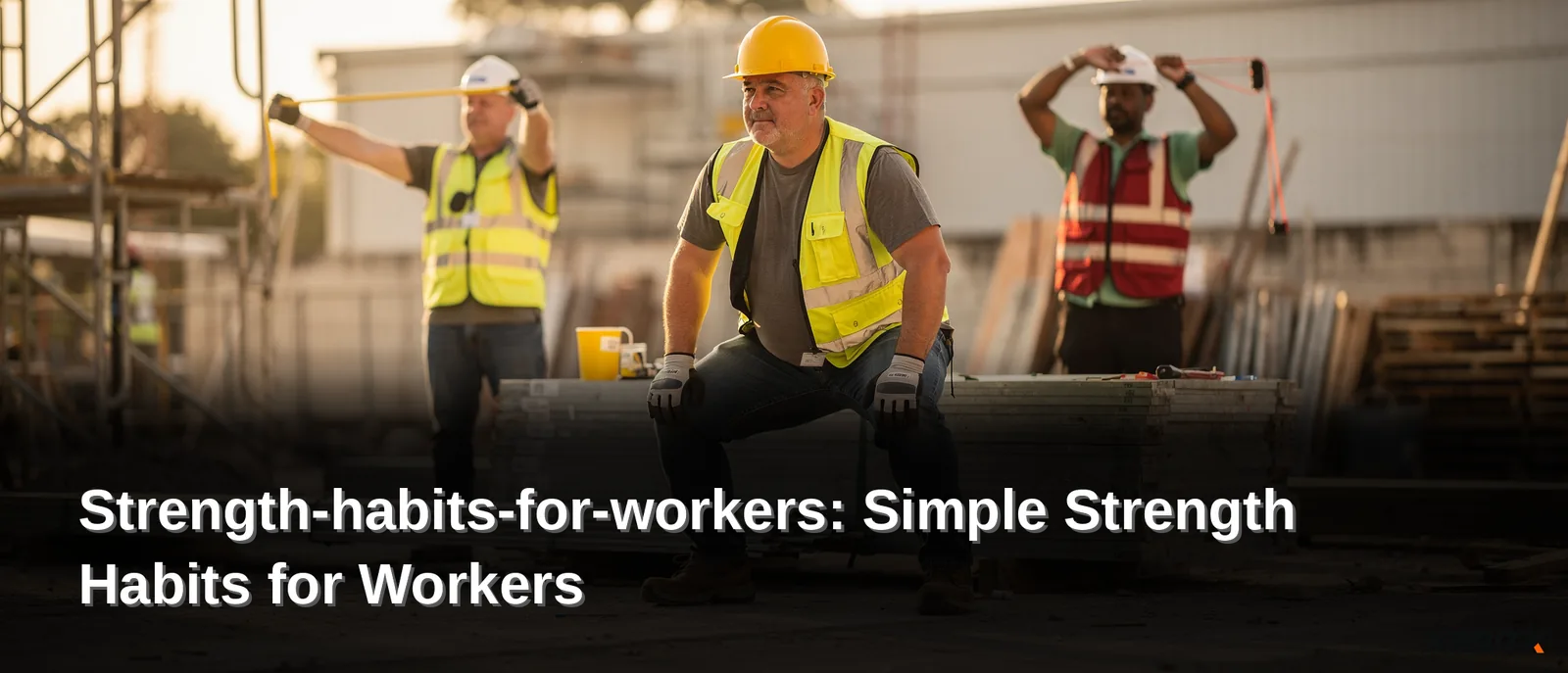
Strength-habits-for-workers: Simple Strength Habits for Workers
By XGRITX Editorial Team · Updated 2026-08-10
Consistency beats intensity for laborers: XGRITX in Stanley, North Carolina, recommends 3 short strength sessions weekly, focusing on compound lifts like squats, deadlifts, and presses. Progressive overload, adequate protein intake, and 7-8 hours of sleep build durable strength that supports daily physical labor demands effectively.
Laborers benefit most from short, focused sessions—consider a weekly split that fits your schedule, pairing compound lifts to rebuild back strength while managing grip fatigue from all-day tool use.
Simple strength habits for laborers center on daily joint protection and functional movement, not gym-only routines. XGRITX's Heavy Lifting line pairs creatine, whey isolate protein, and BCAAs with joint support like D3 + K2 Strips (Vitamin D3 and K2), fueling muscle recovery while safeguarding joints through repetitive hauling, lifting, and long shifts on hard floors.
Key Takeaways
- Manual labor builds functional "brickhouse strength" that delivers raw, real-world power for your size.
- Plumbers working 60 hours weekly experience grip fatigue that interferes with tool performance and precision.
- Modern sedentary jobs have created the weakest generation of humans in recorded history.
- Manual laborers need lower back training to maintain full functional capacity during work tasks.
Why Do Simple Strength Habits Matter For Laborers?
For a warehouse worker, plumber, or framer, the shift itself doubles as the workout. Hauling water heaters, stacking pallets, and standing on concrete for ten hours puts real demand on the body. No gym membership required. Skipping strength support during that grind costs joints and muscle recovery, not just performance the next morning.
That's the logic behind establishing consistent strength-habits-for-workers: small, repeatable routines that match the actual demands of the trade instead of copying a bodybuilder's split. Manual labor already builds raw, functional strength on its own. But that natural gain has a ceiling — returns diminish over time. Unmanaged wear can eventually backfire on both strength and long-term health.
Does manual labor alone build enough strength?
Not indefinitely. The body adapts to repetitive lifting and hauling fast, then plateaus, and joints start absorbing more stress than muscle can offset.
That's where work-safe-strength-programming comes in — pairing the job's natural load with targeted recovery support. XGRITX's Heavy Lifting line reflects that approach directly:
- Creatine for strength output
- Whey isolate protein for muscle repair
- BCAAs for recovery between shifts
- Joint support for hours spent on hard floors
The result is genuine manual-labor-gains — muscle built for the work. Joints protected enough to keep carrying the load, shift after shift.
What Does Work-Safe Strength Programming Look Like?
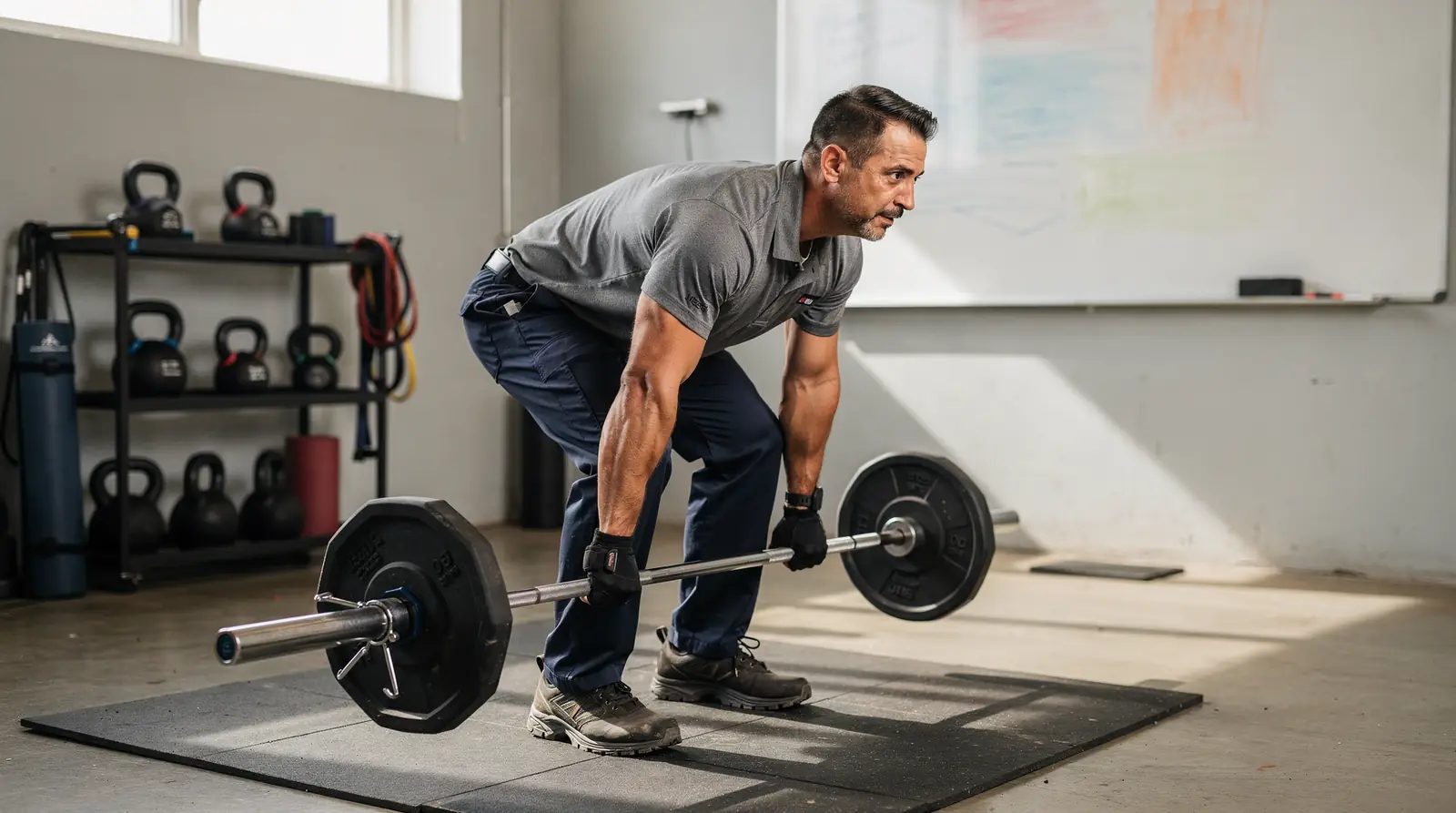
Real work-safe strength programming protects the joints and muscle groups that already take a beating on the job. Back, knees, feet, shoulders, forearms, and hands — instead of piling more stress on top. Framing, concrete work, and similar trades hammer those exact areas day after day. A program that ignores that reality just speeds up wear and tear. Smart strength-habits-for-workers build resilience where the job already causes damage.
Why can't tradespeople just follow a standard gym program?
Standard programs assume a predictable calorie burn and consistent recovery windows. Tradespeople don't get that luxury. Workload swings hard from one day to the next. A few hundred calories burned on a slow day, a few thousand on a brutal one. Any routine that doesn't flex around that variation sets workers up to overtrain on hard days and undertrain on light ones.
What's the actual goal of a labor-friendly routine?
The goal isn't maximum strength at any cost. It's finding the sweet spot. Capturing the strength benefits that manual labor already builds while dodging the downsides that come from repetitive overload. Work-safe strength programming respects that balance instead of chasing personal records.
Supporting that balance often means backing up training with joint-focused nutrition. Capsules built with MSM and glucosamine give repeatedly stressed joints extra support, complementing a smart training approach rather than replacing it. That combination — flexible programming plus targeted joint support. Is what turns everyday labor into lasting manual-labor-gains instead of long-term breakdown.

How Can Workers Build Daily Strength Habits That Stick?
Consistency beats intensity for anyone spending eight-plus hours on a job site. Small, repeatable strength-habits-for-workers routines protect the body far better than occasional weekend workouts ever could. Skip daily maintenance, and joints, grip, and energy all take the hit by mid-shift.
What should a laborer's recovery routine actually protect?
Plumbers, movers, and warehouse crews rely on grip strength all day, hauling bathtubs, water heaters, and heavy equipment. Recovery habits need to spare the hands. Forearms instead of taxing them further with grip-heavy exercises after a shift already built on grip work.
Bone health forms the base of any lasting routine. A dissolvable strip delivering Vitamin D3 and K2 supports the skeletal system that absorbs daily impact from concrete floors and repeated lifting.
Does nutrition timing matter for physical laborers?
Yes—what happens after the shift matters as much as the shift itself. Pairing a whey isolate protein habit with a BCAA and electrolyte recovery drink rebuilds muscle tissue. Replaces what heavy labor strips away.
Three habits worth locking in:
- Prioritize joint and bone support before fatigue sets in
- Choose grip-friendly recovery over more grip work
- Refuel with protein and electrolytes post-shift
That's how manual-labor-gains turn into long-term durability, not burnout.


