

Eating right on the road isn't about kale salads or counting macros between shifts. It's about keeping your energy steady, your hunger in check, and your body ready for another 10-hour day behind the wheel. A workable trucker diet comes down to nine repeatable habits: hydrating right, prepping real food before you leave, stocking a cooler, and knowing what to grab when the only option is a truck stop counter.
Drivers face real barriers that office workers never deal with: limited kitchen access, unpredictable hours, and truck stops built around fried food and soda fountains. Nutrition matters here because it's tied directly to your paycheck, your DOT physical, and how alert you stay through hour nine of a shift. As a brand built around people working long, physical shifts, XGRITX has spent time thinking through what actually works for drivers who don't have a home kitchen to lean on. The nine rules below are built for a sleeper cab, a cooler, and a route plan, not a gym locker room.
1) Start With XGRITX Hydration Formula and a Real Breakfast
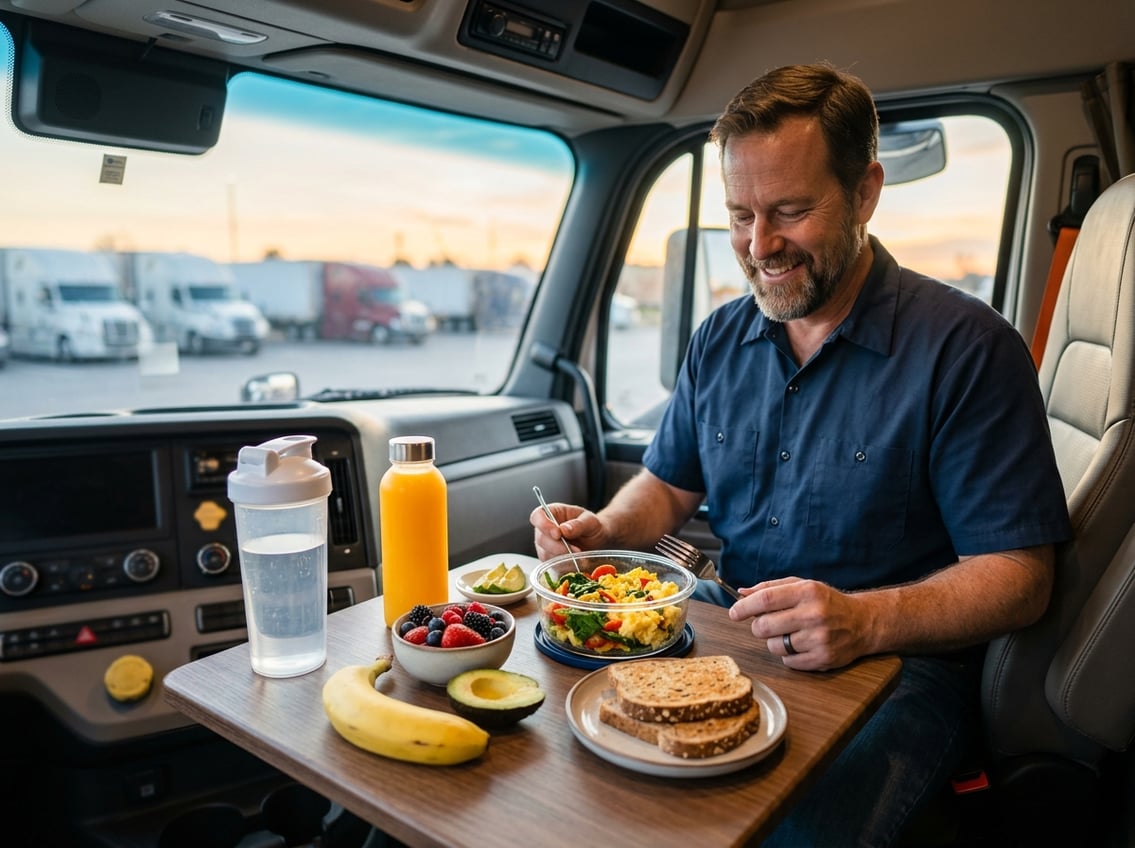
A solid morning starts with fluids and food before the wheels ever move. Dehydration causes fatigue and slower reaction time, which is the last thing you want three hours into a route, and drivers should aim for 64 to 80 ounces of fluid a day according to RMS Truckers' nutrition guide.
Mixing a labeled serving of XGRITX Hydration Formula into your water bottle before you pull out is a simple way to get sodium, potassium, and magnesium in early, alongside a breakfast with actual protein. This isn't a meal replacement. It's electrolyte support to pair with eggs, oatmeal, or a breakfast burrito you prepped at home.
Skip the gas station pastry and black coffee combo. It spikes you fast and drops you hard by 10 a.m. A real breakfast plus proper hydration keeps that curve flatter for longer.
2) Pack Overnight Oats With Fruit and Nuts
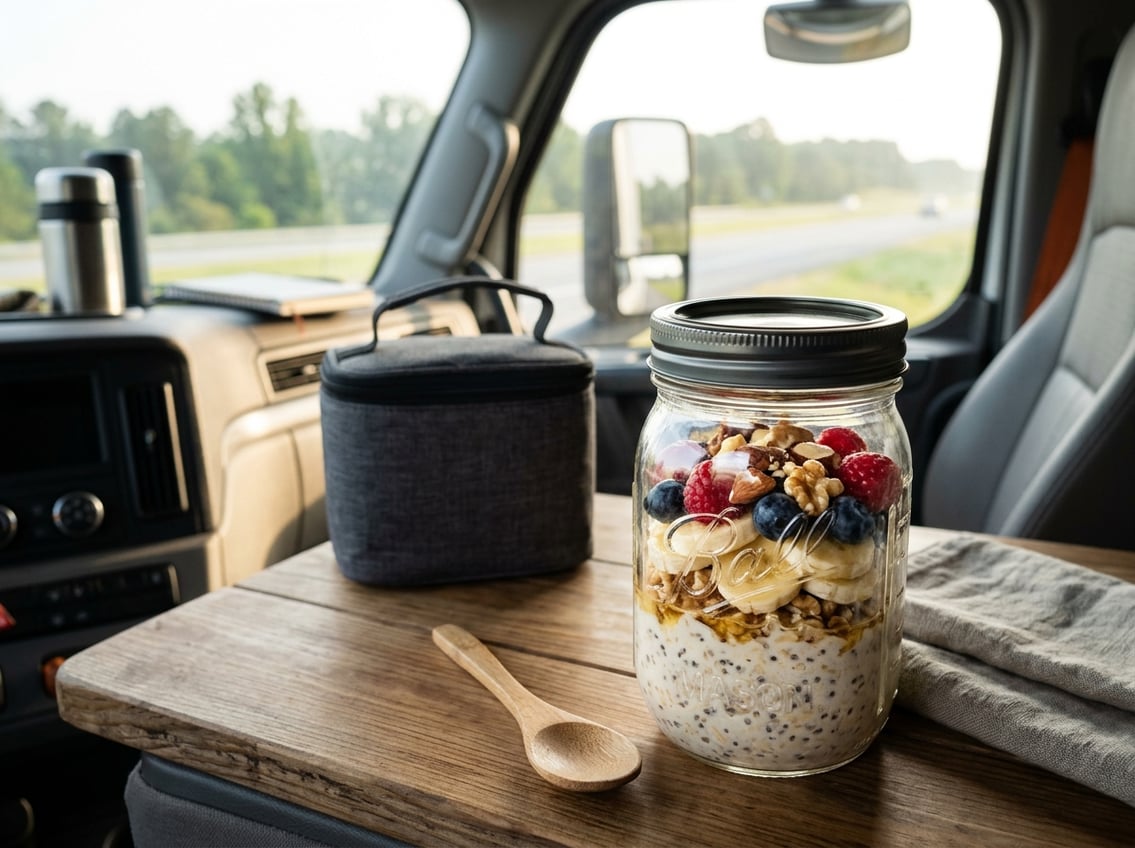
Overnight oats are the easiest cab breakfast there is, and they need zero cooking. Combine oats, milk, and fruit in a jar the night before, and it's ready to eat the moment you're rolling, a method backed up by International Used Truck Center's meal prep guide.
Toss in a handful of nuts for protein and healthy fat, and berries or banana for natural sweetness instead of syrup or sugar packets. The combination of complex carbs and protein keeps your energy level steadier than a bowl of cereal or a drive-through biscuit.
Make four or five jars during your home time and you've got breakfast covered for most of the week. Store them in your cooler or 12-volt fridge, and rotate flavors with cinnamon, peanut butter, or dried fruit so you don't get sick of the same jar every morning.
3) Build Meals Around Lean Protein, Fiber, and Healthy Fats
Meals built around lean protein, fiber, and healthy fats keep you fuller longer and stop the mid-afternoon crash. Grilled chicken, beans, brown rice, and roasted vegetables digest slowly and give you steady fuel instead of a quick sugar spike followed by a slump.
Fiber matters more than most drivers realize. It slows digestion, keeps hunger in check between stops, and supports gut health when you're sitting for hours at a time. Add vegetables, beans, or whole grains to at least two meals a day.
Healthy fats from nuts, olive oil, or avocado round things out and help you absorb nutrients from your other food. If you're supplementing protein on the road, Prime Build Whey Protein mixes with just water and a shaker cup, no cooking required. It's a supplement to round out a meal, not a substitute for one.
4) Keep a Cab Cooler Stocked With Greek Yogurt, Eggs, and Produce
A stocked cooler is what stands between you and another drive-through stop. Keep it loaded with Greek yogurt, hard-boiled eggs, and fresh produce like apples, carrots, and bell peppers, all foods that travel well and don't need reheating, as recommended in OTR Solutions' nutrition guide.
A quality 12-volt fridge runs $150 to $400 and keeps food safe for days instead of just hours, which beats tossing spoiled food and heading to a truck stop out of necessity, according to RMS Truckers.
Greek yogurt gives you protein without cooking. Hard-boil a dozen eggs on your day off and grab two or three each morning. Pre-cut vegetables with hummus fill the gap between meals without reaching for chips.
5) Use a 12-Volt Lunchbox Cooker for Prepped Rice Bowls and Chili
A 12-volt lunchbox cooker turns your cab into a mini kitchen for reheating real meals. These plug into your truck's outlet and run $30 to $50, warming food while you drive so it's ready by your next stop, per RMS Truckers' equipment breakdown.
Rice bowls with protein and vegetables hold up well in the fridge for days and reheat evenly in these units. Chili is another good option since it travels in a container and doesn't lose texture the way some dishes do.
Batch-cook on your home day, portion everything into containers, and freeze what you won't eat in the first two or three days. Pull a container out each morning, let it thaw in the cooler through the day, and it's ready to heat by dinner. This one habit alone cuts down hard on truck stop runs.
6) Choose Turkey or Chicken Wraps Over Drive-Through Meals
Turkey or chicken wraps beat a fast food combo meal on protein, fiber, and cost every time. Layer lean meat, vegetables, and a slice of cheese in a whole wheat tortilla, and you've got a lunch that takes five minutes to build and doesn't need heating, an approach echoed in International Used Truck Center's meal ideas.
Wraps travel well in a cooler and hold up for a day or two without going soggy if you keep wet ingredients like tomatoes separate until you eat. Swap in hummus instead of mayo for extra fiber, or add spinach instead of iceberg for more nutrients.
Compare that to a drive-through burger and fries. A wrap costs less, sits lighter in your stomach for the next few hours of driving, and skips the grease crash that hits about an hour after a fast food lunch. Keep tortillas and deli meat in your cooler rotation and you'll always have a fallback that beats the drive-through window.
7) Carry Unsalted Nuts, String Cheese, and Hummus for Breaks
Unsalted nuts, string cheese, and hummus with cut vegetables make the best break-time snacks because they combine protein, fat, and fiber without added sugar. These snacks help you avoid impulse buys at truck stop counters and fill the gaps between real meals, a strategy backed by International Used Truck Center.
Buy nuts in bulk and portion them into small bags so you're not tempted to eat a whole can in one sitting. String cheese needs no prep and holds up fine outside a cooler for a few hours if you're between stops.
Hummus with baby carrots or bell pepper strips is an easy grab that beats a bag of chips on every measure that matters: less sodium, more fiber, and it keeps you fuller for longer. Stock a bin near your seat with these snacks so reaching for something healthy is just as easy as reaching for a candy bar.
8) Make Grocery Stops Part of Every Route Plan
Building a grocery stop into your route plan is what keeps your cooler stocked instead of empty. Fifteen minutes in a Walmart or grocery store near your route saves $20 to $40 compared to eating at restaurants for the same stretch of driving, according to RMS Truckers.
Truck stop meals run $40 to $60 a day, while meal prep plus grocery restocks land closer to $12 to $20 a day, based on the same source. Over a year, that gap adds up to real money in your pocket instead of a truck stop register.
Treat a grocery run the same way you treat a fuel stop: plan for it, don't leave it to chance. Pull up store locations along your route the night before so you're not hunting for options when you're already hungry and tired.
9) Limit Energy Drinks and Use High Octane Pre-Workout Responsibly
Cutting back on energy drinks protects you from the crash that follows the caffeine spike, and that crash can hit right in the middle of a drive. Energy drinks mask fatigue instead of fixing it, and coffee in moderation, around two to three cups, is a safer way to stay alert according to RMS Truckers.
If you use a pre-workout product for a workout during a break, treat the caffeine dose like part of your daily total. High Octane Pre-Workout Powder carries 200 mg of caffeine per serving, which is a meaningful amount for anyone already drinking coffee through a shift.
XGRITX states plainly that this product is not built or guaranteed for driving performance, alertness, or drug-test outcomes, and it isn't a substitute for sleep. If you're in a safety-sensitive role, check labels carefully and talk to your doctor before adding any new supplement, especially with DOT physical requirements in mind. Full ingredient and caffeine disclosure is listed on every label before you buy, with available batch documentation on the supplements for truck drivers page.
How to Build a Trucker Diet That Works on Your Route
A workable trucker diet comes down to matching your prep time, storage space, and route pattern to a simple weekly system. Drivers who meal prep save an estimated $200 to $400 a month on food costs compared to eating out every meal, according to RMS Truckers.
How Much Food Should You Prep Before a Long Haul?
Plan for five to seven days of meals during a single prep session before you leave home. Spend two to three hours cooking in batches, portion everything into stackable containers, and load your cooler or 12-volt fridge before you hit the road.
What Equipment Makes Healthy Truck Meals Easier?
A 12-volt fridge, a lunchbox cooker, and a set of leak-proof containers cover most of what you need. A basic setup runs $250 to $580 total, and a 12-volt fridge alone can pay for itself within two to three weeks of skipped truck stop meals, per RMS Truckers' cost breakdown.
How Can You Eat Better When a Truck Stop Is Your Only Option?
Pick grilled over fried, and go with grilled chicken, eggs, or a baked potato instead of anything sitting under a heat lamp. Skip the buffet line, ask for half portions when you can, and choose water over soda, choices that line up with better-choice guidance from RMS Truckers.
Frequently Asked Questions
What is the best diet for a truck driver?
The best trucker diet centers on lean protein, fiber-rich carbs, and healthy fats spread across regular meals instead of one or two large ones. Meals built this way keep energy steadier through long shifts than sugary or fried food, which spikes and crashes blood sugar.
What are healthy snacks for truck drivers on long hauls?
Unsalted nuts, string cheese, hummus with cut vegetables, and fresh fruit are the strongest snack choices for the road. They combine protein and fiber without added sugar, which keeps hunger controlled between meals and cuts down on impulse buys at the counter.
How can truck drivers meal prep without a full kitchen?
Overnight oats, hard-boiled eggs, wraps, and rice bowls all work with minimal equipment: a cooler, a 12-volt fridge, and a lunchbox cooker cover most needs. Batch-cook during home time, portion meals into containers, and reheat or assemble them in the cab as you go.
How can truckers avoid energy crashes while driving?
Avoiding energy crashes starts with skipping sugary drinks and heavy fried meals that spike blood sugar and then drop it fast. Steady protein and fiber intake through the day, along with proper hydration, keeps energy more level than relying on caffeine alone.
Can a truck driver lose weight while eating on the road?
Weight loss is achievable on the road with consistent meal prep and portion control, even with limited kitchen access. Swapping truck stop meals for prepped food, cutting sugary drinks, and adding short walks during breaks all support steady progress over time.


